
How field-level intelligence can help farmers identify risks, prioritize scouting, and protect crop value?
As the 2026 U.S. sunflower harvest progresses, growers are seeing a mixed picture: relatively strong national production prospects alongside regional yield declines, crop diseases, weather-related stress, and continued pressure to protect crop quality. According to the USDA’s October 2026 production forecast, U.S. sunflower production is expected to reach approximately 2.30 billion pounds, just 1% below 2025. Average yields are forecast at 1,761 pounds per acre, down approximately 5% from last year.
Despite this decline, the projected national average would still rank as the fourth-highest on record if realized. The National Sunflower Association reported that 62% of the U.S. sunflower crop had been harvested by November 1, six percentage points ahead of the five-year average. However, national averages tell only part of the story.
Regional Yield Differences Highlight Growing Risks
Sunflower yields vary significantly across major producing states. USDA’s October forecast indicates that:
- Kansas: Average yields are projected to decline approximately 29% from 2025.
- Minnesota: Forecast yields are down approximately 13%.
- North Dakota: Yields are expected to decrease approximately 11%.
- South Dakota: Yields are projected to remain relatively stable.
These differences highlight the importance of understanding crop conditions at the regional and individual-field levels. For farmers managing multiple fields, changing weather patterns, soil conditions, and localized crop stress can make it difficult to determine where attention is needed most.
Critical meteorological conditions during 2026
The 2026 sunflower growing season was primarily impacted by dry conditions and expanding drought along with above-normal temperatures across much of the central and northern Great Plains. By late July, only a small share of sunflower acreage remained free from drought conditions that depleted soil moisture during important developmental stages such as flowering and seed development. Warm, dry weather also accelerated crop maturity across the region, while strong winds from localized severe weather increased crop damage and harvest losses while making field operations more difficult.
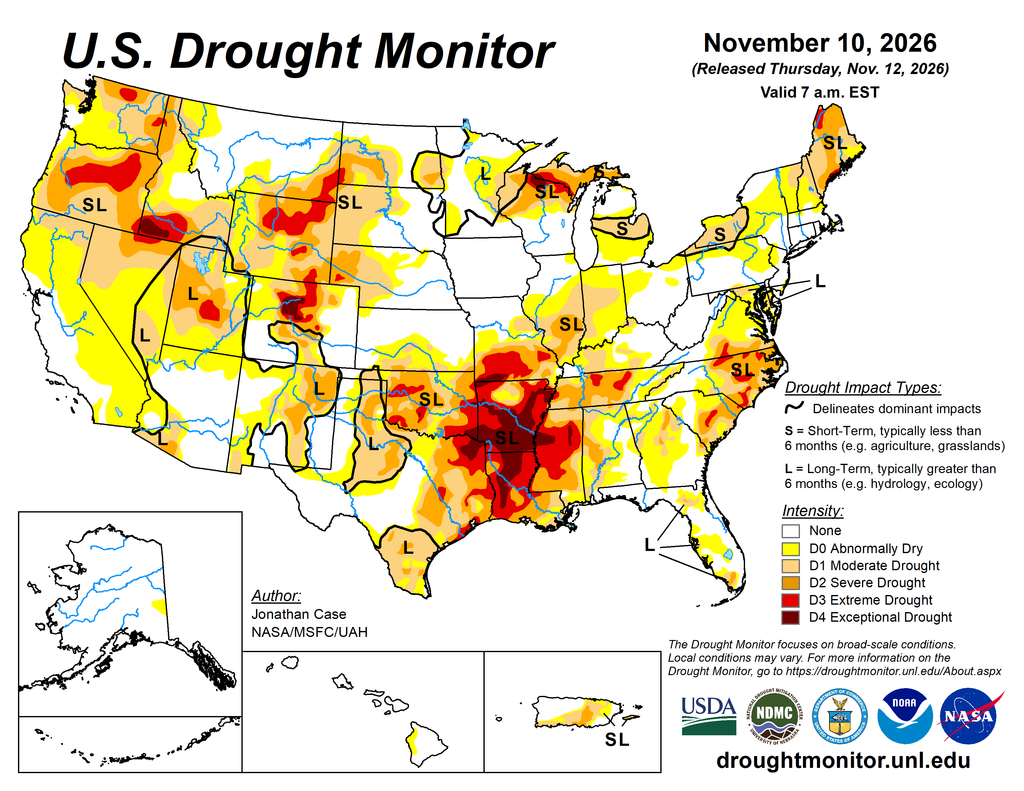
Figure 1. U.S. Drought Monitor for the United States (map released November 10, 2026). Source: USDA / NDMC / NOAA / NASA.
However, late-summer and early-fall rainfall provided important crop relief, particularly in parts of the Dakotas. The scattered rain and relatively warm conditions in September and early October improved seed weight in some locations. At the same time, late-October precipitation also delayed harvest.
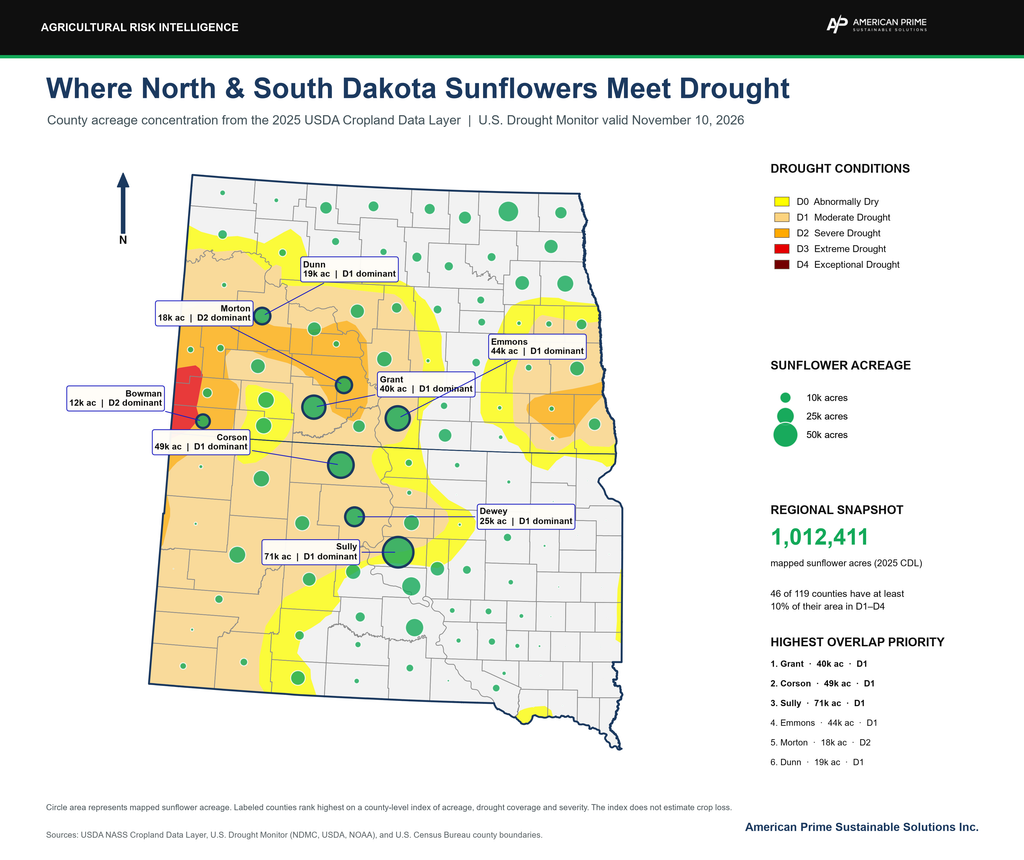
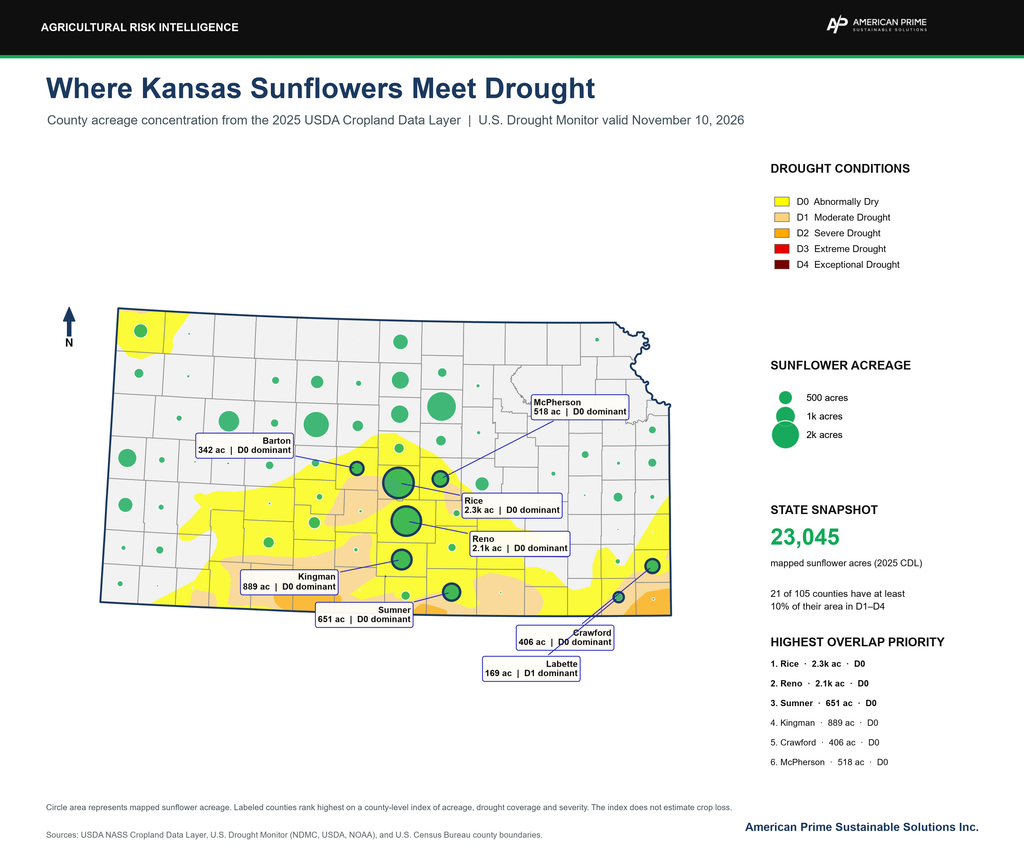
One of the most significant challenges reported during the 2026 season is Phomopsis, a fungal disease that can weaken sunflower stems, increase lodging risk, and contribute to yield losses. In October, the National Sunflower Association published reports from growers in North Dakota and Minnesota describing Phomopsis damage and widespread disease presence in their fields. Other challenges include drought stress, uneven crop development, insect pressure, and difficult harvest conditions caused by excessive moisture or delayed dry-down.
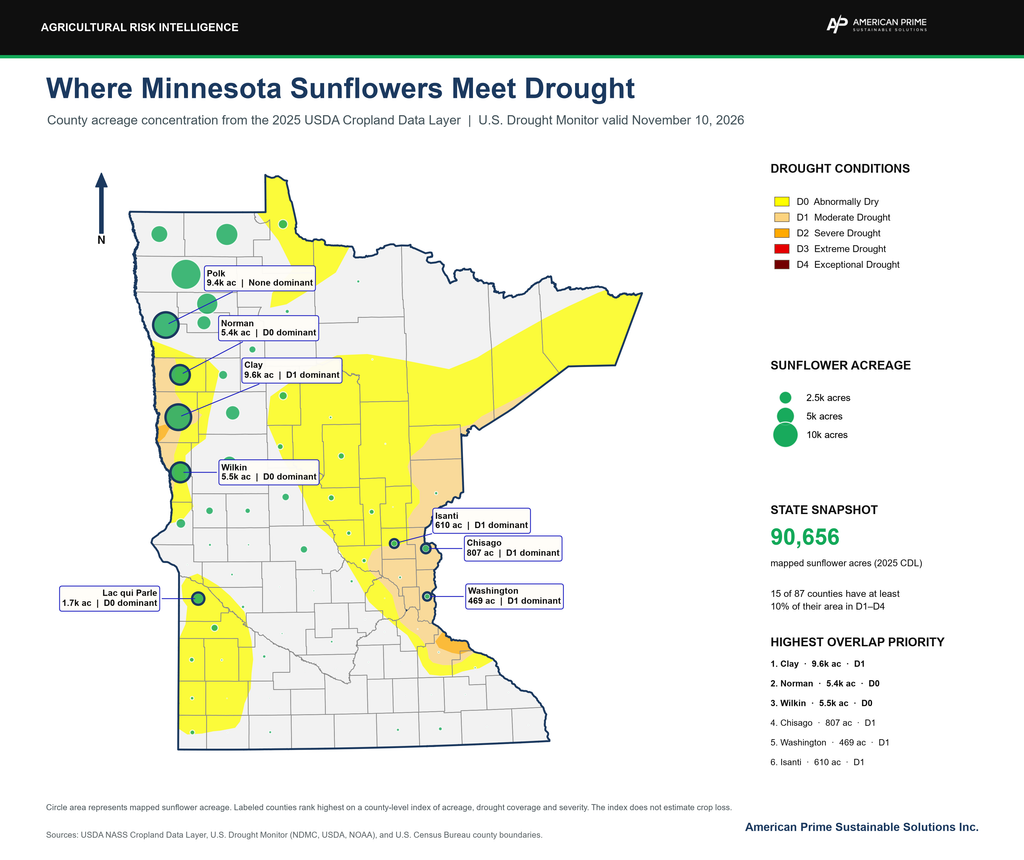
These challenges reinforce the value of regular crop monitoring and timely field scouting. For oil-type sunflower growers, profitability depends not only on harvested volume but also on seed quality. The National Sunflower Association notes that some processors offer premiums for oil content above 40%, with a typical premium structure of 2% additional price for each percentage point above that threshold. Under such a structure, sunflower seed with 45% oil content could receive a 10% price premium compared with the base price. This creates an additional economic incentive for farmers to understand crop conditions throughout the growing season and identify factors that may affect yield and quality. Oil content is influenced by multiple factors, including genetics, environmental conditions, and crop development. Accurate determination of oil content requires appropriate seed testing or validated analytical methods.
How AP Intelligence Can Support Better Field Decisions
American Prime Sustainable Solutions is developing AP Intelligence, a satellite- and weather-informed crop-monitoring platform designed to help agricultural professionals better understand changing field conditions and prioritize field scouting. By bringing together satellite observations, environmental information, weather data, and analytical models, AP Intelligence is designed to support more informed agricultural decision-making. For sunflower producers, this approach offers several potential benefits:
- Identifying field variability:
Satellite-based vegetation monitoring can help highlight differences in crop development and areas exhibiting unusual changes in vegetation conditions.
- Prioritizing field scouting:
Instead of inspecting every field with equal urgency, farmers and agronomists can use monitoring information to help determine which locations may warrant closer examination.
- Monitoring environmental stress:
Weather and satellite observations can provide additional context for evaluating changing crop conditions, particularly during periods of drought or other environmental stress.
- Supporting crop risk management:
A clearer understanding of field variability can help growers make more informed decisions about scouting schedules, resource allocation, and the need for further investigation. The immediate value lies in helping farmers identify where conditions are changing and where professional field assessment may be most useful.
From More Data to Better Decisions
The 2026 sunflower season demonstrates that strong national production figures can coexist with significant localized agricultural challenges. As growers face increasing pressure to manage production costs, protect crop quality, and respond to changing environmental conditions, timely access to practical field intelligence becomes increasingly important. American Prime Sustainable Solutions is working toward making agricultural monitoring more accessible and actionable, helping farmers and agronomists connect digital observations with real-world field decisions. The goal is not to replace agricultural expertise, but to support it with better information about which fields need attention first and why.
Learn more about American Prime Sustainable Solutions:
https://www.americanprime.co
Sources:
- National Sunflower Association — USDA October 2026 Sunflower Production Report
- National Sunflower Association — Sunflower Highlights, November 2, 2026
- National Sunflower Association — Sunflower Highlights, October 5, 2026
- National Sunflower Association — Sunflower Highlights, October 13, 2026
- National Sunflower Association — Sunflower Highlights, August 10, 2026
- https://droughtmonitor.unl.edu/CurrentMap.aspx
- https://developers.google.com/earth-engine/datasets/catalog/USDA_NASS_CDL
- https://developers.google.com/earth-engine/datasets/catalog/TIGER_2018_Counties